Deprecated: strpos(): Passing null to parameter #1 ($haystack) of type string is deprecated in E:\sites\eternalskinspa\showSections.php on line 614
Which Dark Spot Is It? Melasma, PIH, or Sun Spots
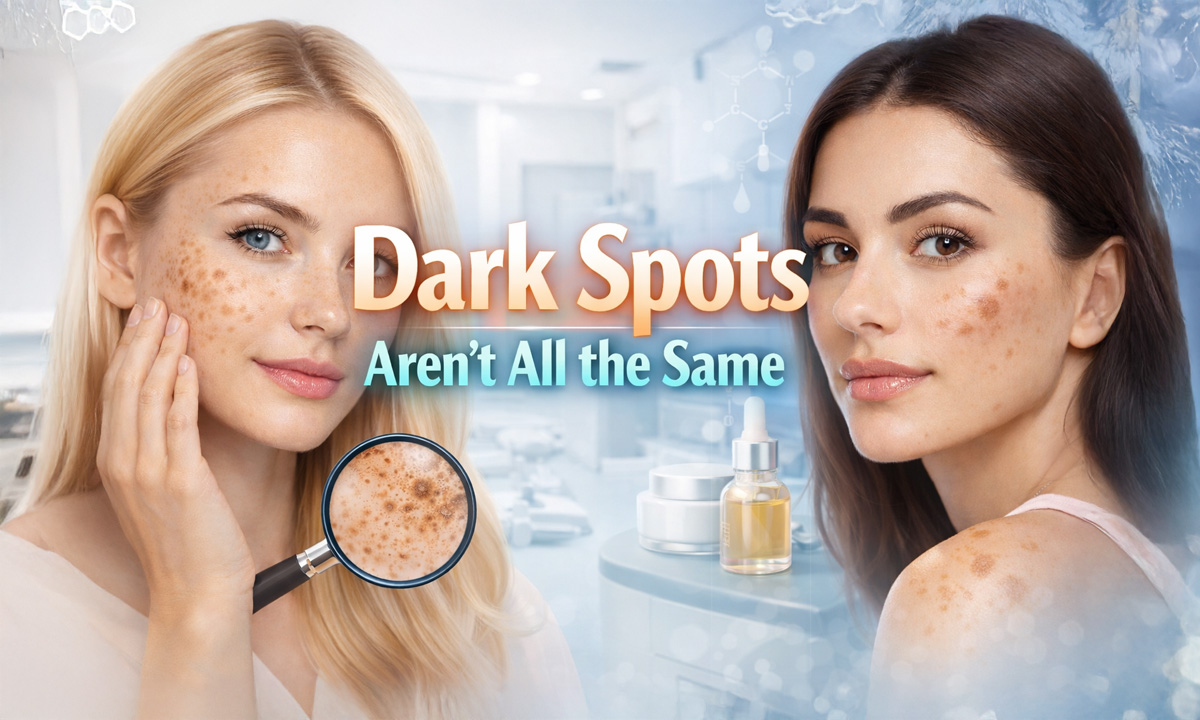
If you’ve ever looked in the mirror and wondered why a dark spot won’t fade no matter how much brightening serum you use, you’re not alone. One of the most common skincare frustrations is realizing that not all pigmentation behaves the same way. A dark spot caused by acne heals very differently from one triggered by hormones or years of sun exposure. Understanding what kind of dark spot you’re dealing with is the first step toward seeing real results—and avoiding unnecessary irritation.
This guide breaks down the three most common types of pigmentation: melasma, post-inflammatory hyperpigmentation (PIH), and sun spots. By the end, you’ll know how to identify each dark spot, why it formed, and what treatments actually make sense for beginners and seasoned skincare users alike. Think of this as your foundation for smarter brightening.
Why All Dark Spots Aren’t the Same
 |
Many people treat every dark spot as if it came from the same cause. In reality, pigmentation forms at different depths of the skin and responds to different triggers. When the wrong approach is used, that stubborn dark spot can linger—or even worsen.
Here’s why identifying the type matters:
-
Each dark spot forms for a different reason
-
Treatments that help one type may do nothing for another
-
Some pigmentation requires long-term management, not quick fixes
Ignoring these differences often leads to over-exfoliation, irritation, and unrealistic expectations. Learning to read your skin is essential, especially if you’re new to targeted treatments.
Melasma: Hormone-Driven Pigmentation
Melasma is one of the most misunderstood forms of dark spot discoloration. It typically appears as soft-edged patches rather than single spots and often shows up symmetrically on the cheeks, forehead, upper lip, or jawline. This type of dark spot is deeply influenced by hormones and heat—not just sun exposure.
 |
 |
Melasma-related dark spot patches tend to return if triggers aren’t controlled. That’s why treatment focuses on suppression and prevention rather than permanent removal. This requires patience and consistency.
Melasma teaches us that not every dark spot should be attacked aggressively. Sometimes, a controlled and calming approach delivers better results.


"Consistency will outwork intensity in every routine."
Post-Inflammatory Hyperpigmentation (PIH): The Aftermath of Inflammation
|
Unlike melasma, PIH is usually temporary—but only if the skin is treated gently. |
 |
 |
PIH-related dark spot discoloration often responds well to consistent skincare, making it encouraging for beginners who want visible progress.
Sun Spots: Accumulated UV Damage
Sunspots—also known as solar lentigines or age spots—form due to years of cumulative UV exposure, not a single episode of skin inflammation. Ongoing sun exposure overstimulates melanocytes, leading to concentrated melanin deposits that settle into specific areas of the skin and become increasingly stubborn over time. Unlike freckles, which may fade when sun exposure is reduced, sunspots are persistent and can darken further without proper sun protection.
They typically appear later in life—often in the 30s, 40s, or beyond—and are most common on areas with consistent sun exposure, such as the face, hands, chest, shoulders, and arms. Closely linked to photoaging, sunspots often develop alongside visible signs of aging like uneven texture, fine lines, and reduced skin firmness.
What makes sunspots unique:
-
Caused by cumulative UV damage over many years
-
Appear as well-defined brown or tan dark spot patches
-
Typically, they do not fade seasonally
-
Strongly associated with photoaging and sun-damaged skin
Because sunspots are deeply rooted, they typically require exfoliation and cell turnover to improve. This makes retinoids and acids especially effective.
Key Differences at a Glance
 |
Each dark spot type requires a different balance of prevention, treatment, and maintenance. Treating them all the same is one of the biggest skincare mistakes beginners make. |
Treatment Expectations and Prevention Tips
No matter the type of dark spot—melasma, PIH, or sun spots— effective treatment always begins with protection. Daily broad-spectrum sunscreen is essential. Without it, even the most potent brightening products may fail to maintain results. UV exposure deepens existing pigmentation and can trigger new dark spots, making prevention just as crucial as correction.
It’s also important to have realistic expectations. Dark spots develop slowly over time, and they often fade gradually. Depending on the depth and cause of the pigmentation, noticeable improvement can take weeks to months of consistent care.
Daily routine basics to follow:
-
Apply broad-spectrum SPF every morning, even on cloudy days or indoors, as UVA rays can penetrate windows
-
Avoid heat exposure when managing melasma, since heat can stimulate melanocytes and worsen pigmentation
-
Support the skin barrier before increasing actives with moisturizers and gentle cleansers
-
Introduce new products slowly to minimize irritation, since inflammation can make dark spots more stubborn
Additional treatment options to consider:
- Topical brighteners: Ingredients like vitamin C, niacinamide, and licorice extract help reduce melanin production, gradually lightening dark spots and evening out overall skin tone.
- Chemical exfoliants: AHAs, BHAs, and mild acids promote cell turnover, helping to remove pigmented cells and soften the appearance of dark spots over time.
- Retinoids: Both prescription and over-the-counter retinoids accelerate exfoliation and improve skin texture, making dark spots less noticeable.
-
Professional treatments: For deeper or persistent dark spots, procedures like chemical peels, microdermabrasion, laser therapy, or microneedling can target pigmentation more effectively under the guidance of a dermatologist.
-
Consistency and patience: Dark spots rarely fade overnight. Switching products too frequently or layering too many active ingredients can irritate the skin, which may worsen dark spots instead of improving them.

If a dark spot doesn’t respond after several months of consistent care, it’s often a sign to seek professional guidance rather than adding more products. A dermatologist can identify the exact type of pigmentation and recommend targeted treatments that are both safe and effective.
“Not every dark spot has the same story—so not every dark spot needs the same solution.”
Final Word on Dark Spots
A dark spot isn’t just a cosmetic concern—it’s your skin communicating its history. Whether it’s hormones, inflammation, or sun exposure, learning to listen allows you to respond smarter, not harder. With the right knowledge, realistic expectations, and consistent care, even the most stubborn dark spot can improve over time.
Skincare isn’t about erasing your past—it’s about supporting your skin’s future with confidence.